November 10, 2026
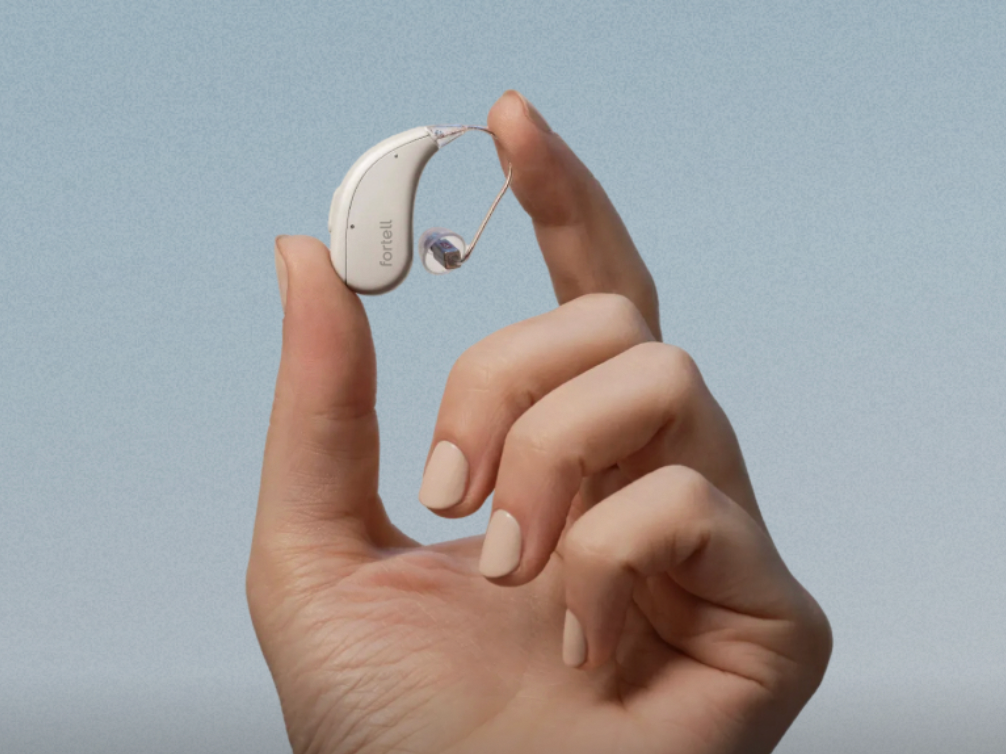
Fortell
I would say time flies, but for a long while now, it’s evaporated before it can get off the ground. While it’s true I’ve had some dramatic life changes in the last year, the real culprit keeping me from touching down here was the fact that I just didn’t have anything new to say on hearability. At best, It seemed I could only amplify frustration as the realm of hearing technology seemed to stall, and the world of sound continued to recede or distort.
Yet here I am, and—is it possible?— a robust, astutely designed, powerful technology has changed the soundscape! My new Fortells are enabling me to hear conversation more easily. I can immerse myself in music if I choose to. And I generally function more readily in the cacophonous world at large the rest of the time.
I had just about given up. I wasn’t really looking any more. But I happened upon a New Yorker article by David Owen, whose writing about hearing loss has articulated and validated some of my own experience over the years, and here he was, describing an upstart company taking an aggressive approach to processing sound.
Intrigued.
Skeptical.
Then when I read that their engineering involved extreme artificial intelligence, I confess I had a temporary allergic reaction, being more attuned to the potential nefarious underbelly of the technology.
I took the plunge anyway. The price tag is high, but the promise was higher, and the return policy is robust, so I went for it.
Cut to now: Allow me to gush. They work. They do what they purport to do. I am still learning how to use them, experiencing radical differences in sound as I practice switching between the different modes (“Front voices” “Conventional” “AI”).
To switch modes, you simply push a button on the right hearing aid, and a voice announces which mode is active. Before I tried the Fortells, I’d read about this but wondered why they would bother to announce the mode.—I figured you should be able to identify what mode you’re in by how things sounded, without having to be told. While that’s true enough, having used them, I realize I like the announcement feature: If I want to focus on only the voice in front of me, and the announcement identifies “conventional,” I don’t waste time analyzing what I’m hearing and miss whatever’s happening while I am analyzing. Instead I quickly press the button again. Wow. So far, so-oo good!
The other night we went out to a club— the owner was celebrating a big birthday, and a couple bands were on the bill. I anticipated testing the Fortells further, but the music was so loud, I ultimately opted for ear plugs instead. (Good rule regarding earplugs: Don’t leave home without ‘em.—It’s going to take a wave of social engineering to change that dynamic!)
Anticipating that I might have to swap out the hearing aids for earplugs, I’d brought the hearing aid case with me for safe keeping. Like other hearing aid cases, Fortell’s doubles as a charger. But here again Fortell has changed the game for the better. Other hearing aid cases I’ve used require that they be tethered to an outlet. Fortell’s charging case can hold up to three days worth of power, and can charge your hearing aids “in the wild.”
With my previous hearing aids, I’d have to push the button on the hearing aids and wait seven seconds before they turned off, and then stash them somewhere. If I left them on and just pulled them out of my ears they’d whistle away. If I placed them in their case for safe keeping, unless the case is plugged in, the hearing aids turn on and whistle away.
So far, so much better.
Fortell only integrates with Apple technology, but if you have an iPhone, you’re in luck. The Fortell app is used for virtual audiology appointments and allows the audiologist to test your hearing and program the hearing aids remotely.
The app also allows you to customize how the world sounds to you. In my estimation, the bar for sonic modifications in hearing aid apps is pretty low, so I had no expectation that the app would be particularly effective.
Yet even though the app provides minimal controls, the adjustments I made actually yielded a difference I could readily hear. I could warm up the bass and attenuate the harsh twang of guitar strings left too long untouched. It made me feel like playing. OMG, is this happening?!
So, it is a new day. I’m inspired. I find myself considering options I’d started to shy away from or rule out altogether. Host a dinner party? Join a book club? Check out that podcast? Yes.
I am still getting use to new ways of hearing—and likely will be for days to come, but I am encouraged, energized, and grateful.